
Search Texas Booking Reports
Texas booking reports are official arrest records created when a person is booked into a county jail. Each of the state's 254 counties keeps its own records through the county Sheriff's Office. You can search Texas booking reports through county jail websites, the Texas Department of Criminal Justice inmate search, and direct public records requests. This page covers how to find booking reports across Texas, which agencies hold these records, what data they include, and the state oversight systems that shape public access to them.
Texas Booking Reports Overview
Texas Booking Report System
The Texas booking report system runs at the county level. When law enforcement arrests someone and brings them to a county jail, the intake process begins. The jail creates a booking report that captures the arrest details, charges, and physical description of the person taken into custody. This process repeats thousands of times each week across the state. The Texas Department of Public Safety's Crime Records Division acts as the state control terminal for eight state and national criminal justice programs. The Division collects data submitted by local agencies, builds it into statewide databases, and forwards records to the FBI's national criminal justice system. Every arrest for a felony or a misdemeanor other than one punishable by fine only must be reported to this system. The DPS coordinates this data flow across all 254 counties and hundreds of law enforcement agencies statewide.
County Sheriff's Offices are the front line of booking records in Texas. Each of the 254 counties operates its own jail or contracts with a neighboring county for jail services. The Sheriff oversees the jail and maintains records on each person booked. These records include personal information, the circumstances of the arrest, the charges filed, and bond details. Some counties post daily inmate rosters on their websites. Others handle requests by phone or in person at the jail. In large counties like Harris, Dallas, and Tarrant, the Sheriff's Office runs dedicated online search portals. You can look up current inmates and recent bookings directly from your computer. Smaller counties often handle requests more informally. But all 254 Texas counties are subject to the same public records law. No matter where the booking happened, you have the right to request that record from the Sheriff's Office that created it. The level of online access varies, but the right to access does not.
The DPS Crime Records Division maintains the Computerized Criminal History system, which links arrest data from local agencies to a central state repository. This is a distinct system from the individual county booking databases, but the two are connected through required reporting.
The DPS Crime Records Services page is the starting point for understanding how Texas collects and manages criminal history data at the state level.
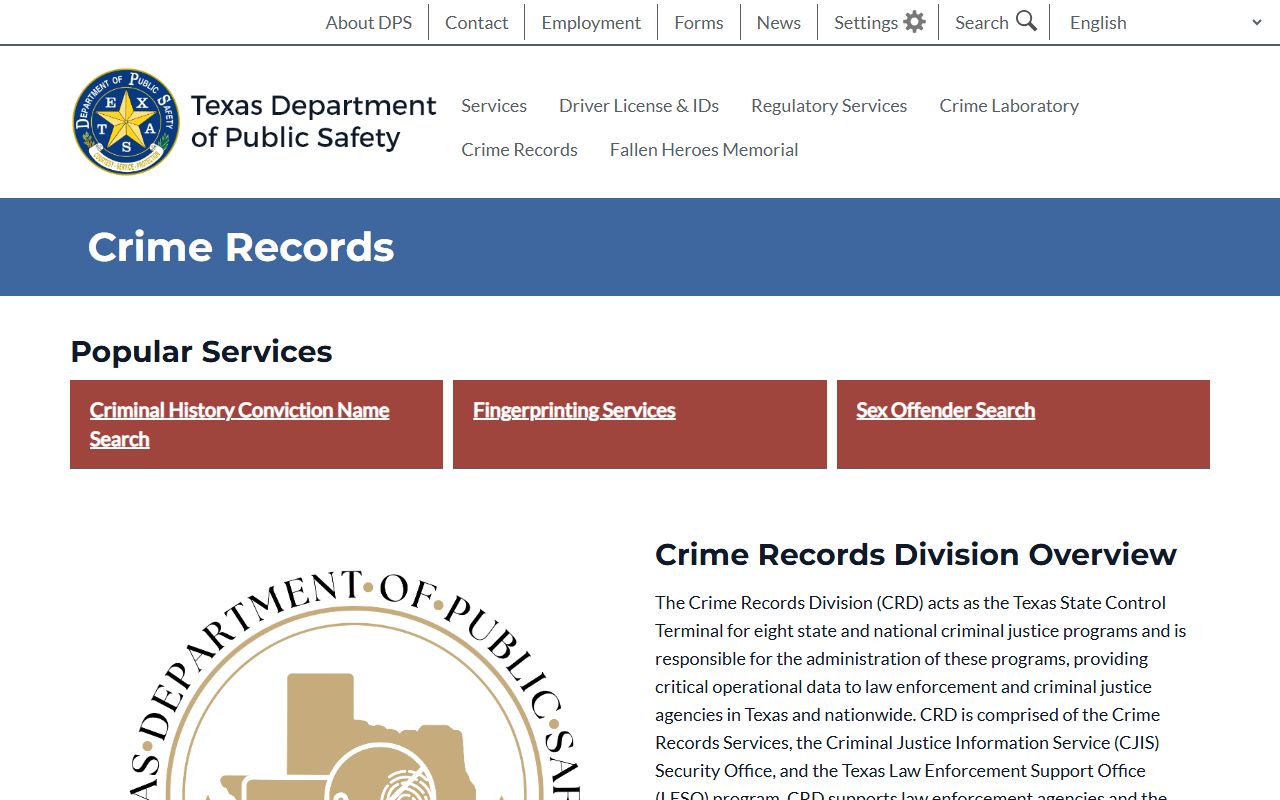
The Division provides around-the-clock access to mission-critical criminal justice systems and handles biometric identification services for agencies statewide.
The Texas Commission on Jail Standards provides an overview of the regulatory framework that governs county jails and shapes the booking and records process in every Texas county.

TCJS oversight applies to all 254 county jails, including privately operated facilities and those housing out-of-state inmates.
Find Texas Booking Reports Online
Texas gives the public several ways to search for booking reports. The most direct route is the county jail's own website. Many Texas counties maintain live inmate rosters that update in real time or on a daily basis. You can search by name, booking number, or date of birth depending on the system. If a person is currently in custody, you will typically see their booking photo, the charges listed against them, the bond amount, and the date they were booked in. For counties without an online portal, you call the jail directly or visit in person during business hours. Online access is improving every year as more counties adopt modern jail management software, but it is not uniform across the state. Your best approach is to go directly to the county Sheriff's Office website for the county where the arrest took place.
The Texas Department of Criminal Justice inmate search is a separate state-level tool. It covers people serving sentences in TDCJ-managed state prisons, not people currently held in county jails awaiting trial or sentencing. If the person you are looking for has been convicted and transferred to state custody, the TDCJ search is the right place to start. It shows the offender's current location, the offenses they were convicted of, and a projected release date. This system is free and open to the public.
The TDCJ inmate search portal is a key resource for locating people in the state prison system as opposed to county jail custody.
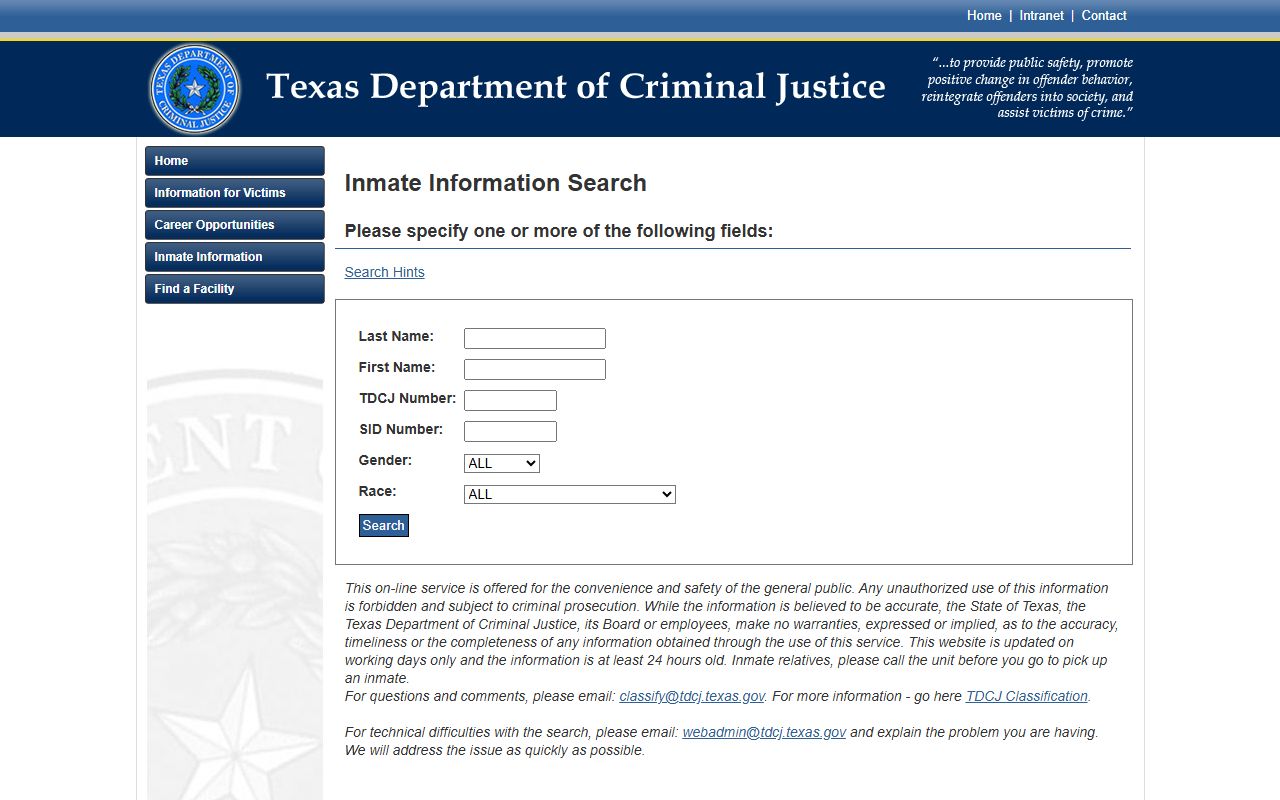
The TDCJ system covers offenders under active supervision, including those in TDCJ facilities and those on parole or other forms of supervised release.
VINELink is used by many Texas counties for custody status alerts. You can register to receive notifications when an inmate's status changes. Releases, transfers, and custody changes all trigger alerts. The service runs around the clock and is free. Many Texas county jails participate in the VINE network. If you need to know whether someone is still in custody and the jail website is not showing current data, VINE is a reliable backup. The system pulls data directly from participating jail management platforms rather than relying on manual updates.
Written records requests under Texas Government Code Chapter 552 are always an option. You submit the request to the Sheriff's Office in writing, include the person's name and the approximate booking date, and the agency has a set time to respond. Standard copy fees may apply. For older records not shown in online rosters, a written request is often the only way to get the data.
Note: County jail websites update at different intervals, and some only show current inmates rather than a searchable history of past bookings.
What Texas Booking Records Show
Texas law defines what a booking record must include. Under Article 66.102 of the Texas Code of Criminal Procedure, the computerized criminal history system must record specific fields for each arrest. These include the offender's full name and any known aliases, the date of birth, and a physical description covering sex, weight, height, race, ethnicity, eye color, hair color, and any scars, marks, or tattoos noted at intake. The state identification number assigned by DPS is part of the record. For the arrest itself, the system captures the arresting agency, the charge by offense code and incident number, whether the charge is a misdemeanor or felony, the exact date of the arrest, and the final disposition of the case once it is resolved.
The Texas Code of Criminal Procedure Chapter 66 sets the foundational rules for the state's criminal history record system, including what data must be collected at the time of each arrest.
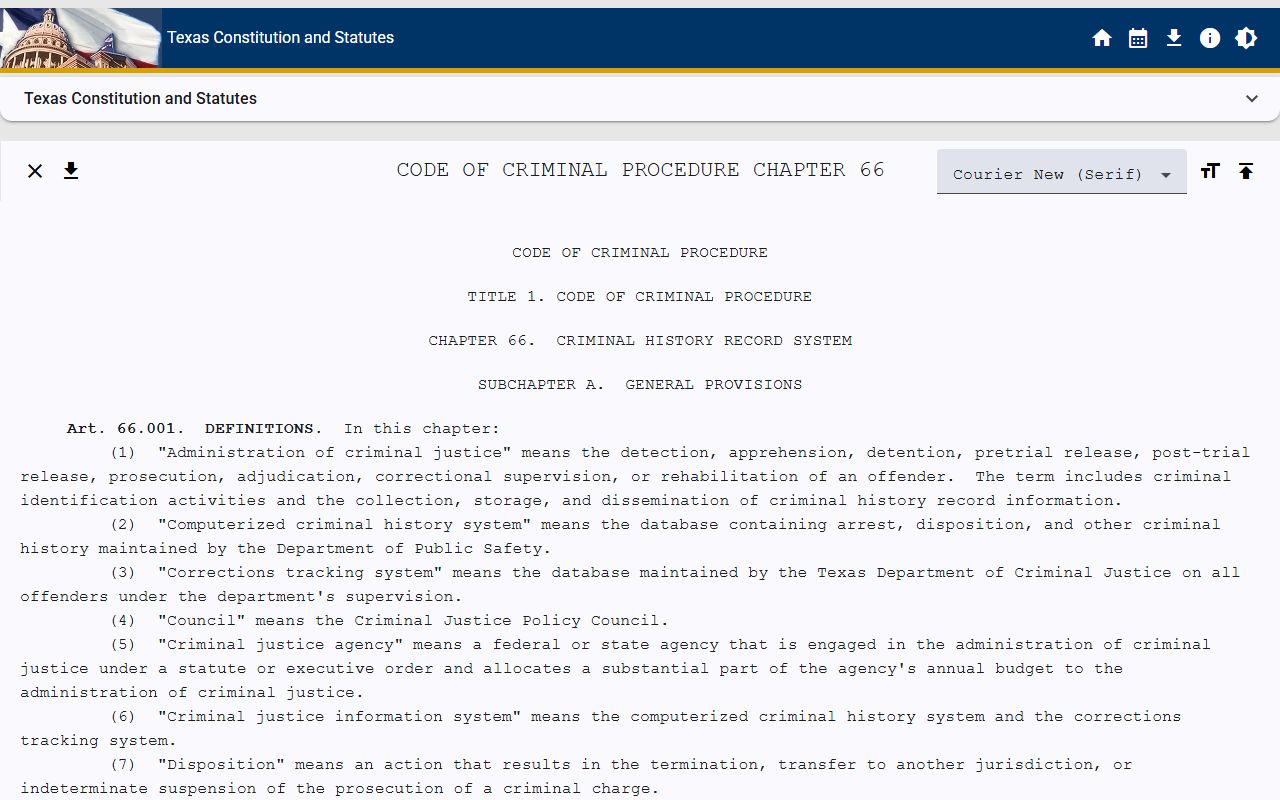
Chapter 66 requires that arrest data reach the state system no later than seven days after the date of the arrest, keeping the statewide database current.
Individual county booking reports often go beyond the state minimum. The following fields are commonly included on local jail rosters and booking sheets:
- Full legal name and known aliases
- Date of birth and physical description
- Booking date, time, and booking number
- Charges filed, classified as misdemeanor or felony
- Arresting agency and officer
- Bond or bail amount and type
- Booking photo (mugshot)
Texas Commission on Jail Standards
The Texas Commission on Jail Standards sets the rules for how county jails operate. Created by the Texas Legislature in 1975, TCJS oversees all 254 county jails, plus privately operated facilities and those housing out-of-state inmates. Every county jail must meet minimum standards for construction, maintenance, and operation. The Commission sends inspectors to each facility at least once per fiscal year. Jails that fail inspections must correct problems within a set timeframe. TCJS also reviews all plans for new jail construction and renovations before work begins. This oversight role means that the booking process is standardized across a state as large and varied as Texas, though local systems and software differ from one county to the next.
TCJS also requires health intake procedures at booking. When a person arrives at a Texas county jail, they receive a health screening. The jail must document any special medical or mental health needs on a health tag at intake. Each facility operates under a written health services plan. Health records from intake are part of the overall booking file, though they are subject to separate privacy protections. These requirements exist alongside the criminal booking data and are part of what makes the Texas jail intake process more structured than in many other states.
The TCJS population reports page gives public access to monthly data on jail populations across all 254 Texas counties.
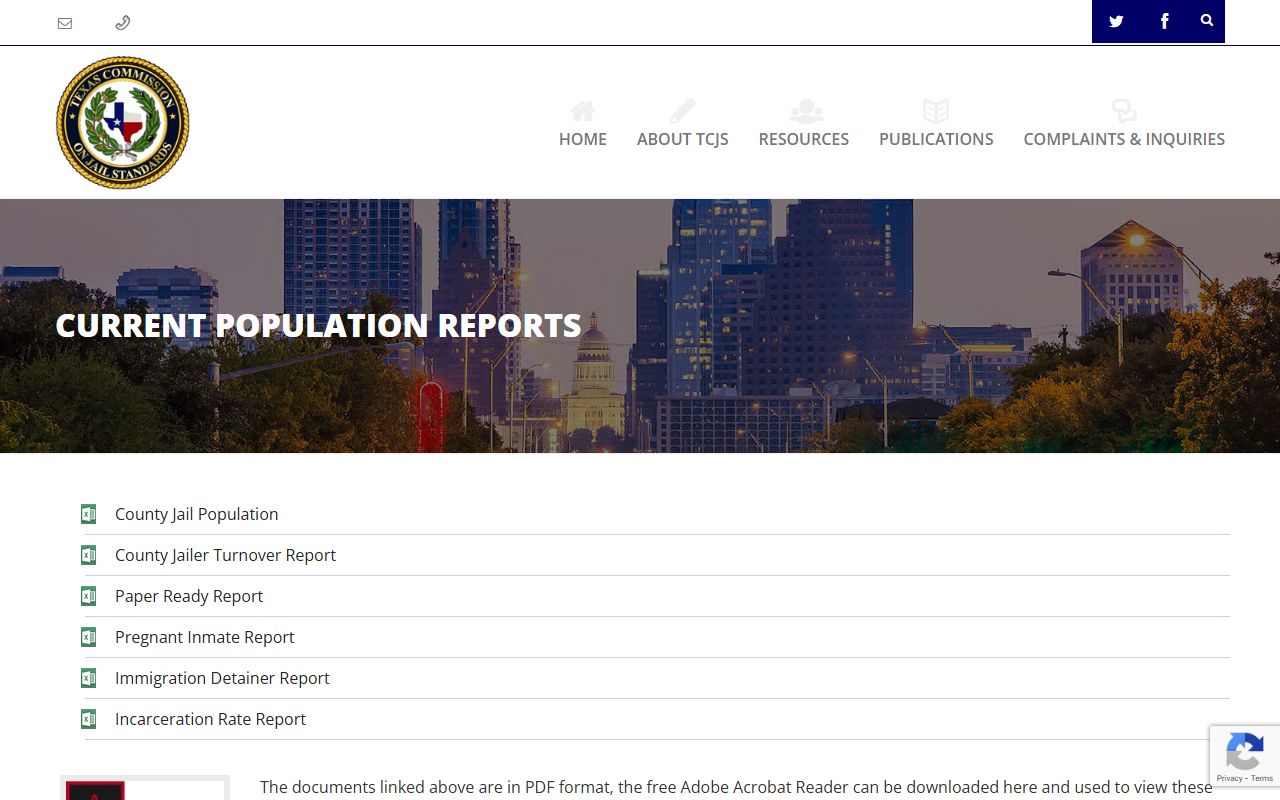
These reports break down jail populations by county, offense type, and time period, making them useful for understanding booking activity at the local level.
TCJS publishes monthly reports covering all 254 counties. The reports show jail population by county, incarceration rates, historical offense breakdowns, and data on counties housing inmates elsewhere. About 19 Texas counties do not operate their own jail and contract with neighboring counties instead. For booking records from those counties, you still contact the originating county's Sheriff's Office. That office holds the record even if the person is physically housed in another facility. The TCJS jail standards section outlines the requirements jails must meet to stay in compliance.
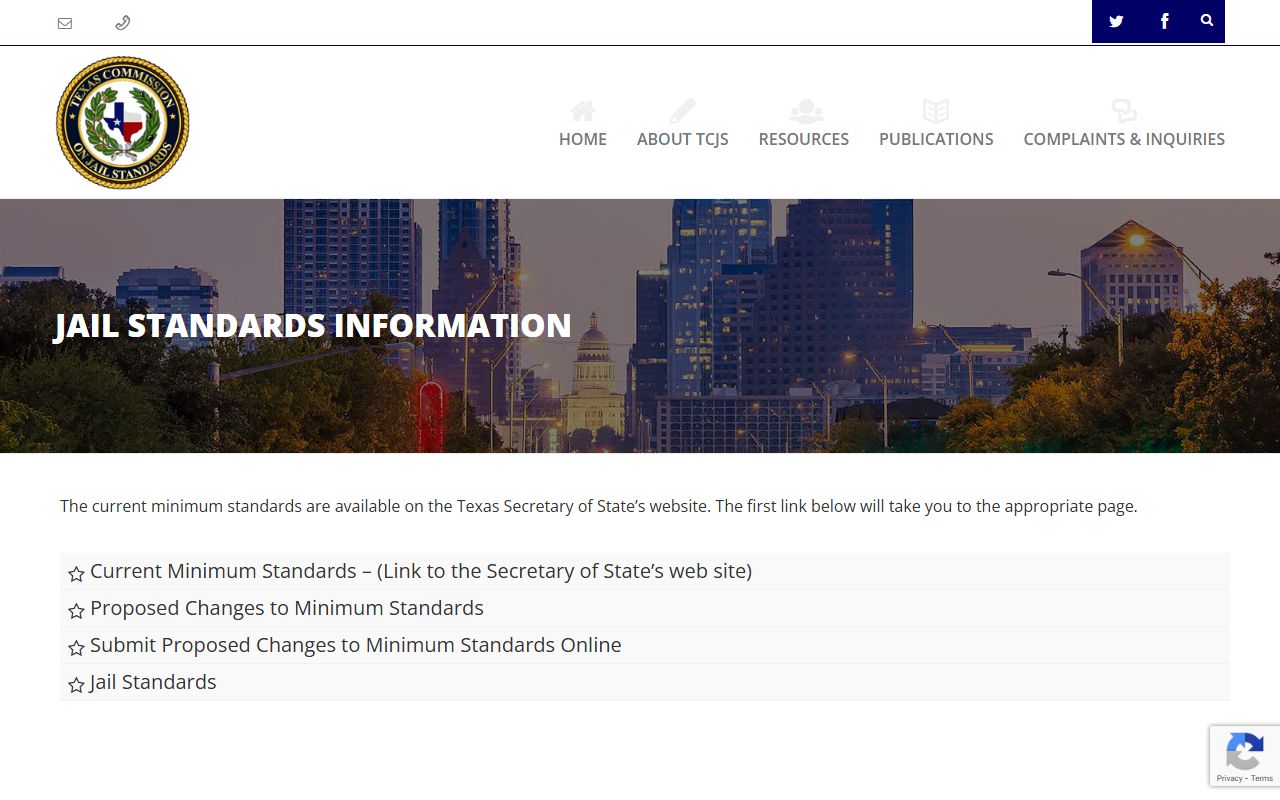
Compliance with TCJS standards is verified through annual on-site inspections and ongoing technical assistance provided to county jail administrators.
Texas Public Records Law
Texas Government Code Chapter 552, called the Public Information Act, gives everyone the right to access records held by government bodies, including booking reports and arrest records held by county Sheriff's Offices. Section 552.001 of the Act states that government is the servant and not the master of the people, and that every person is entitled to complete information about government affairs. You do not have to be a party to the case. You do not need to give a reason for your request. The Act covers any information collected, assembled, or maintained in connection with official government business, and booking records clearly fall within that scope. Requests must be made in writing, but email is generally accepted. The agency has 10 business days to respond.
The Texas Government Code Chapter 552 text is available online and covers the full scope of the Public Information Act, including what counts as public information and how agencies must respond to requests.
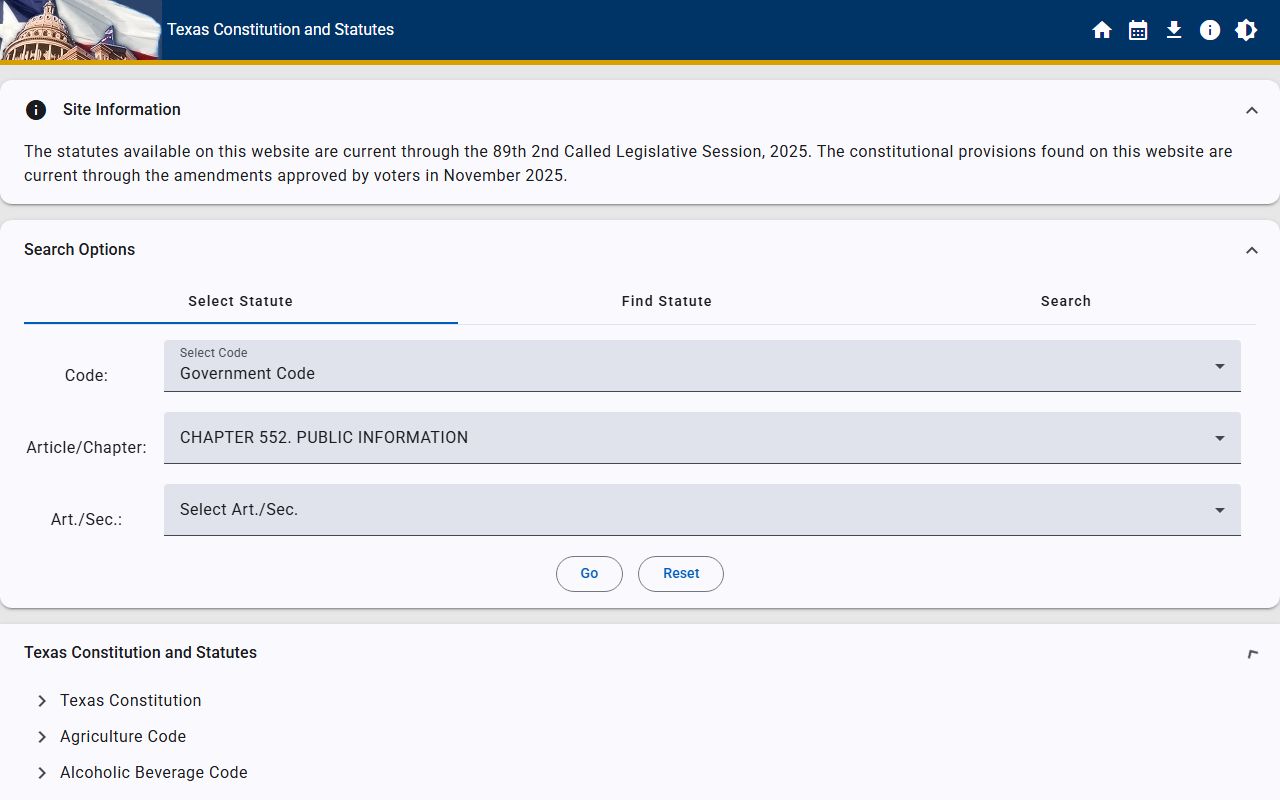
The Act applies to all government bodies in Texas, including county jails, Sheriff's Offices, and municipal law enforcement agencies that hold booking data.
The Texas Attorney General's Open Government division oversees how the Public Information Act is applied. If a Sheriff's Office denies your request, you can ask the AG for a ruling on whether the denial was proper. The AG reviews the situation and issues an opinion. Most booking reports and basic jail roster data are released without challenge. Some records tied to active investigations may be temporarily withheld. Records involving juveniles may have restricted access. But standard booking information, charges, and custody status are generally available to any person who asks. The AG's office also publishes guidance on how to submit records requests and how to appeal a denial.

The Attorney General's Open Government division can be reached for guidance on public records requests and agency compliance with the Public Information Act.
Note: If an agency fails to respond within 10 business days of receiving your written request, that is a violation of the Texas Public Information Act and may be reported to the Attorney General.
Texas Arrest Reporting Requirements
Texas law sets strict deadlines for reporting arrests. Under Article 66.252 of the Texas Code of Criminal Procedure, an offender's arrest must be reported to the DPS system not later than seven days after the date of the arrest. Arresting agencies must also prepare uniform incident fingerprint cards and submit all required data within 30 days of receipt. Court clerks must report the disposition of cases to DPS once a case is resolved. This chain of reporting keeps the Computerized Criminal History system accurate and up to date. The Texas Department of Criminal Justice maintains a separate corrections tracking system that links with the DPS system once an offender is sentenced to state custody. The two systems together form the core of Texas's public criminal history infrastructure.
The Texas Department of Criminal Justice homepage provides access to offender information and explains how state-level supervision data is managed.

TDCJ manages supervision of offenders who have been sentenced to state custody, which is a step beyond the county jail booking process but directly connected to it through the statewide reporting chain.
37 Texas Administrative Code Section 269.1 sets requirements for county jail record systems. Each Sheriff or jail operator must keep a daily record of the number of inmates in the facility and a separate record on each individual inmate. These individual records are what become available to the public as booking reports. They must track custody status, charges, medical intake notes, and release information. The TDCJ Offender Information service extends this data to people who have moved through the county jail system into state-level supervision. It shows current location, conviction offenses, and projected release date and is free to use for anyone with a name or TDCJ number to search by.
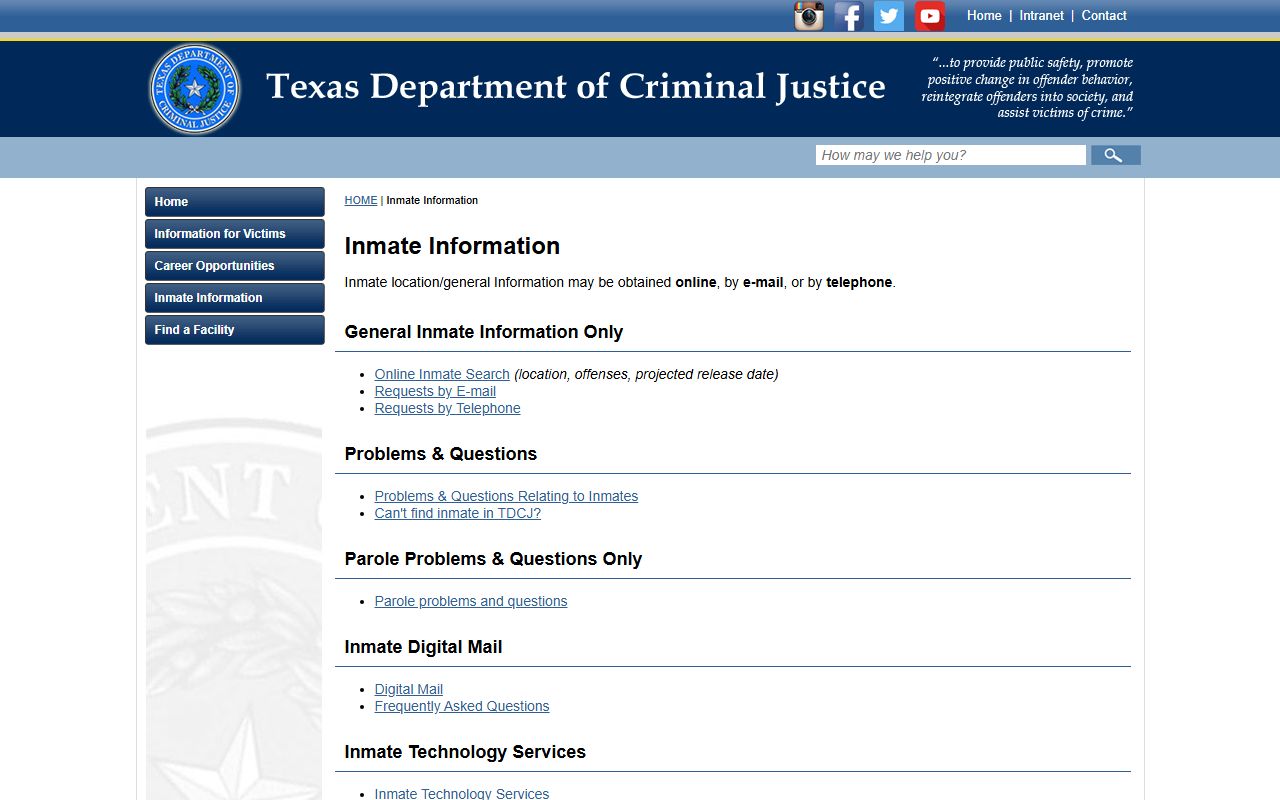
The TDCJ Offender Information portal is separate from county booking records but provides the next layer of data once a person moves from county jail to state supervision.
Browse Texas Booking Reports by County
Each of Texas's 254 counties has its own Sheriff's Office and jail facility. Select a county below to find local contact info, inmate search portals, and booking report resources for that area.
Booking Reports in Major Texas Cities
Residents of major Texas cities can find booking reports and arrest records through the county jail serving their area. Pick a city below to find specific resources for that location.